
The companion page covers hillside, apartment and older-home inspections in LA, and when sampling is worth adding to one.
Seeing a suspicious spot or smelling something off in your property is unsettling. Mold testing in Los Angeles gives you the documented, science-backed answers you need to move forward with confidence. At Golden State Mold Inspections, we go beyond a visual check. We collect air, surface, and bulk samples from your property and send them to an accredited third-party laboratory for full analysis.
Based in El Segundo, we serve homeowners, tenants, landlords, and commercial property owners throughout Los Angeles County. Our certified inspectors follow a structured testing process that identifies what types of mold are present, where concentrations are highest, and what conditions are driving growth.
We do not offer remediation services, which keeps our results fully objective and free from any conflict of interest. Every test comes with a detailed written report that is accurate, well-documented, and easy to act on. If you want real data backed by lab science, we are ready to deliver it.
What Mold Testing Actually Measures
A lot of people assume a visual inspection tells the whole story. In many situations, testing goes deeper and finds what cannot be seen or smelled on the surface.
Air Quality Testing
We collect air samples using spore trap cassettes placed in different areas of your property. These samples capture airborne mold spores and are analyzed by an accredited lab to measure:
- Total spore count per cubic meter of air
- Species identification of mold types present
- Comparison against outdoor baseline samples taken at the same time
This method is especially useful when mold is suspected inside walls, in ductwork, or in spaces that are enclosed and not easily accessible during a visual walkthrough.
Surface Testing
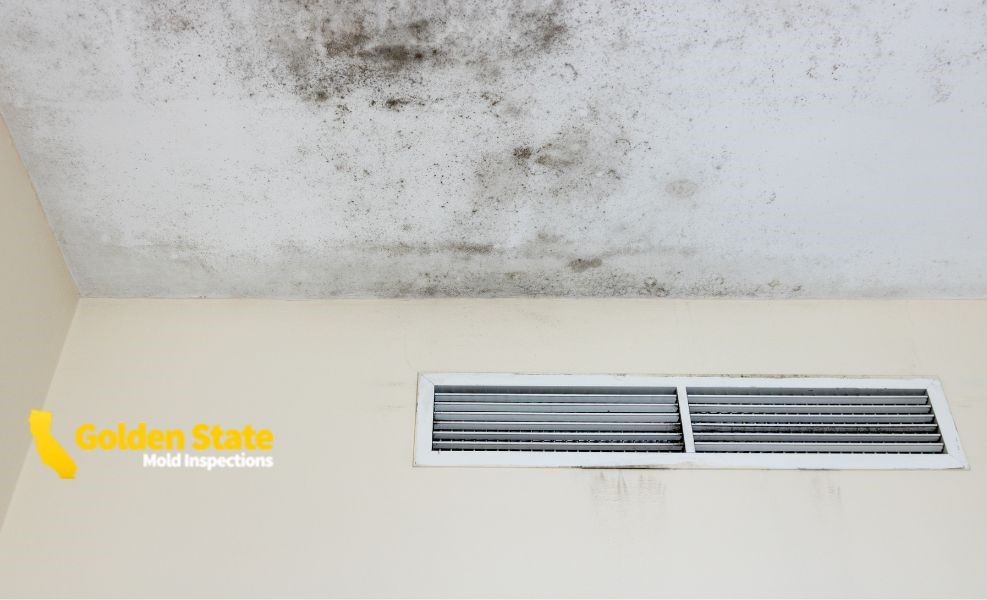
When visible growth or staining is present, we collect surface samples using swabs or tape lifts. According to the Occupational Safety and Health Administration, surface sampling helps confirm whether visible discoloration is actually mold and, if so, which species are present.
Surface testing is particularly useful for:
- Confirming mold presence on specific building materials
- Identifying species when health concerns are involved
- Documenting findings for insurance claims or legal proceedings
Bulk Sampling
In cases where building materials may be significantly contaminated, we remove a small section of the material and send it to the lab for analysis. This method delivers highly accurate species identification and is often used before or after professional remediation work to document conditions at a specific point in time.
Our Full List of Mold Testing and Inspection Services
We offer a complete range of testing and inspection services for residential and commercial properties throughout Los Angeles. Our services include:
- Full property mold inspections
- Indoor air quality testing and sampling
- Air spore trap sampling
- Surface swab and tape lift testing
- Bulk material sampling
- Moisture mapping and thermal imaging
- Post-remediation clearance testing
- Pre-purchase mold testing
- Rental and multi-unit property testing
- Commercial building inspections and testing
When Mold Testing in Los Angeles Makes Sense
You do not always need to see mold to benefit from professional testing. Here are the most common situations where testing gives property owners the answers they need.
After a Water Event
Flooding, pipe bursts, and roof leaks all create the moisture conditions mold needs to grow quickly. Testing after a water event tells you whether mold has already started developing, even if nothing is visible yet on surfaces.
Before Buying a Property
Pre-purchase mold testing in Los Angeles gives buyers documented evidence of the property’s condition before closing. It is a practical step that protects your investment and provides objective information for negotiations.
During a Tenant or Landlord Dispute
When tenants and landlords disagree about whether mold is present or who is responsible for it, our lab-certified results provide neutral, third-party documentation that holds up in formal settings.
After Remediation Work
Post-remediation clearance testing confirms that mold levels have returned to acceptable ranges after cleanup has been completed. This step protects both property owners and occupants and provides documentation that the work was effective.
Ongoing or Unexplained Health Concerns
If people inside a home or commercial building have experienced persistent respiratory symptoms, allergic reactions, or other unexplained health complaints, indoor air quality testing helps identify whether elevated mold spore levels are a contributing factor.
What to Expect During a Mold Testing Appointment
Pre-Visit Consultation
Before we arrive, we ask a few questions about your property, any recent water events, and what prompted you to schedule testing. This helps us prioritize the right areas during the visit.
On-Site Inspection and Sampling
Our inspector conducts a full walkthrough, uses thermal and moisture detection equipment, and collects the appropriate samples based on what is found. We take outdoor baseline samples as well to give the lab an accurate comparison point.
Lab Submission and Analysis
All samples are submitted to an accredited third-party lab. Turnaround time on results typically allows us to deliver your report promptly after the inspection visit.
Written Report Delivery
Your final report includes photographs from the visit, lab analysis results, a summary of findings by area, and clear recommendations. We walk through the results with you so nothing is left unclear.
Why Choose Golden State Mold Inspections for Mold Testing
We have built our reputation in Los Angeles on accurate results and honest reporting. Here is what makes us different:
- Certified inspectors with hands-on LA market knowledge
- Accredited third-party lab testing for every sample we collect
- Fully independent, with no remediation services that could influence results
- Thermal imaging and moisture detection included in full inspections
- Detailed written reports with lab data, photographs, and clear recommendations
- Fast report turnaround to keep your timeline and decisions moving
- Residential, rental, and commercial testing available throughout LA County
Areas We Serve for Mold Testing in Los Angeles
Our team covers El Segundo and communities throughout LA County, including:
- El Segundo
- Manhattan Beach
- Redondo Beach
- Hermosa Beach
- Torrance
- Hawthorne
- Lawndale
- Inglewood
- Culver City
- Santa Monica
- Venice
- Marina del Rey
- Playa del Rey
- Gardena
If you do not see your city listed, call us. We serve a wide area and can frequently accommodate additional locations throughout the county.
Get Lab-Certified Mold Testing in Los Angeles Today
When you need answers about what is growing inside your property, guessing simply is not good enough. Golden State Mold Inspections delivers professional mold testing in Los Angeles backed by accredited lab results, thorough on-site inspections, and detailed written reports you can use and rely on. We are based in El Segundo and ready to serve property owners throughout LA County.
Call our team at (310) 525-0619 or visit goldenstatemoldinspections.com to book your mold test today.
Air, Surface or Tape Lift: Which Sample Answers Which Question
The three sample types are not interchangeable, and a test that uses the wrong one answers a question nobody asked.
Air samples measure what is actually airborne in a room, in spores per cubic meter. This is the sample that matters when the complaint is a smell, a symptom or an unexplained reaction, because it describes what a person in that room is breathing.
Surface samples, usually a swab, establish what a specific patch is. They answer “is this mold, and which kind”, not “how much is in the air”.
Tape lifts are a surface sample taken with clear tape pressed to the material. They are the gentlest option on a finished wall or a piece of furniture, and they keep the spore structures intact for the laboratory.
Why the Outdoor Control Sample Decides Everything
Spores are outdoors all the time, and they come inside every time a door opens. So an indoor number on its own means very little. Every air sample we take is paired with an outdoor control collected the same day, at the same time, with the same pump and the same cassette.
The comparison is the finding. Indoor levels at or below the outdoor baseline, with a similar mix of species, describe a normal building. Indoor levels well above outdoors, or a species indoors that barely registers outside, point at a source inside the property. A laboratory report without that control cannot support either conclusion, which is why reports that omit it tend to fall apart the moment anyone challenges them.
How to Read the Laboratory Report
Results come back from an independent accredited laboratory, usually within a few business days, and the useful parts are easy to find once you know what they are:
Spore counts per cubic meter for each sample, with the outdoor control beside them. Genus names such as Aspergillus, Penicillium, Cladosporium or Stachybotrys, which is the one people mean when they say black mold. Relative proportions, because a shift in the mix between rooms often locates the source faster than the raw totals. And the sample locations, which is why a report that only says “bedroom” is worth less than one that says which wall.
Testing describes conditions. It does not find the water. That is the job of the inspection itself, which is set out on our Los Angeles mold inspection page, and the two are normally done on the same visit.